





LIVE NUDE GIRLS
Boston Center for the Arts, April 2021
Actual Size Gallery, Los Angeles, July 2020
Barre Center for Buddhist Studies, Spring 2018
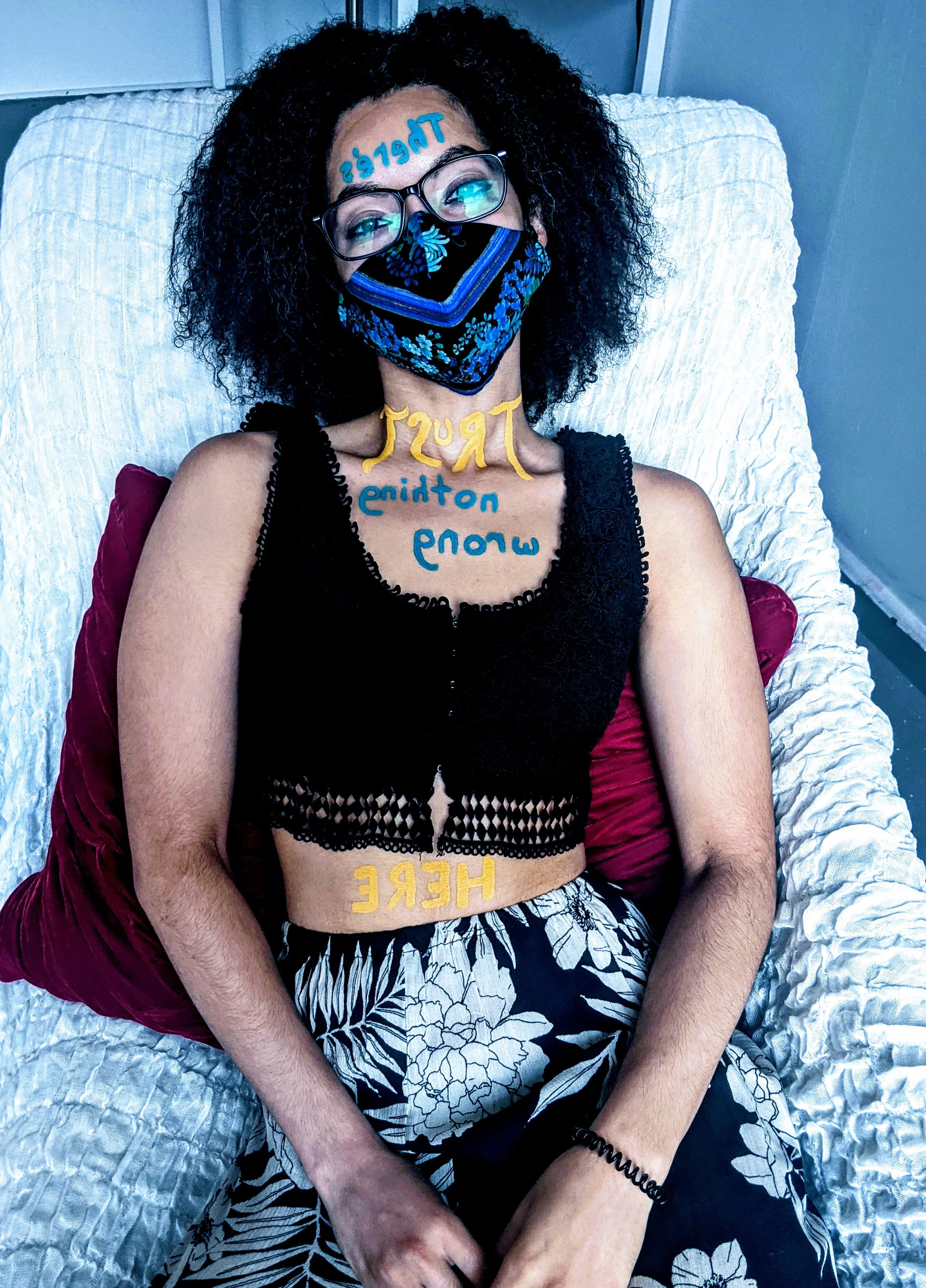
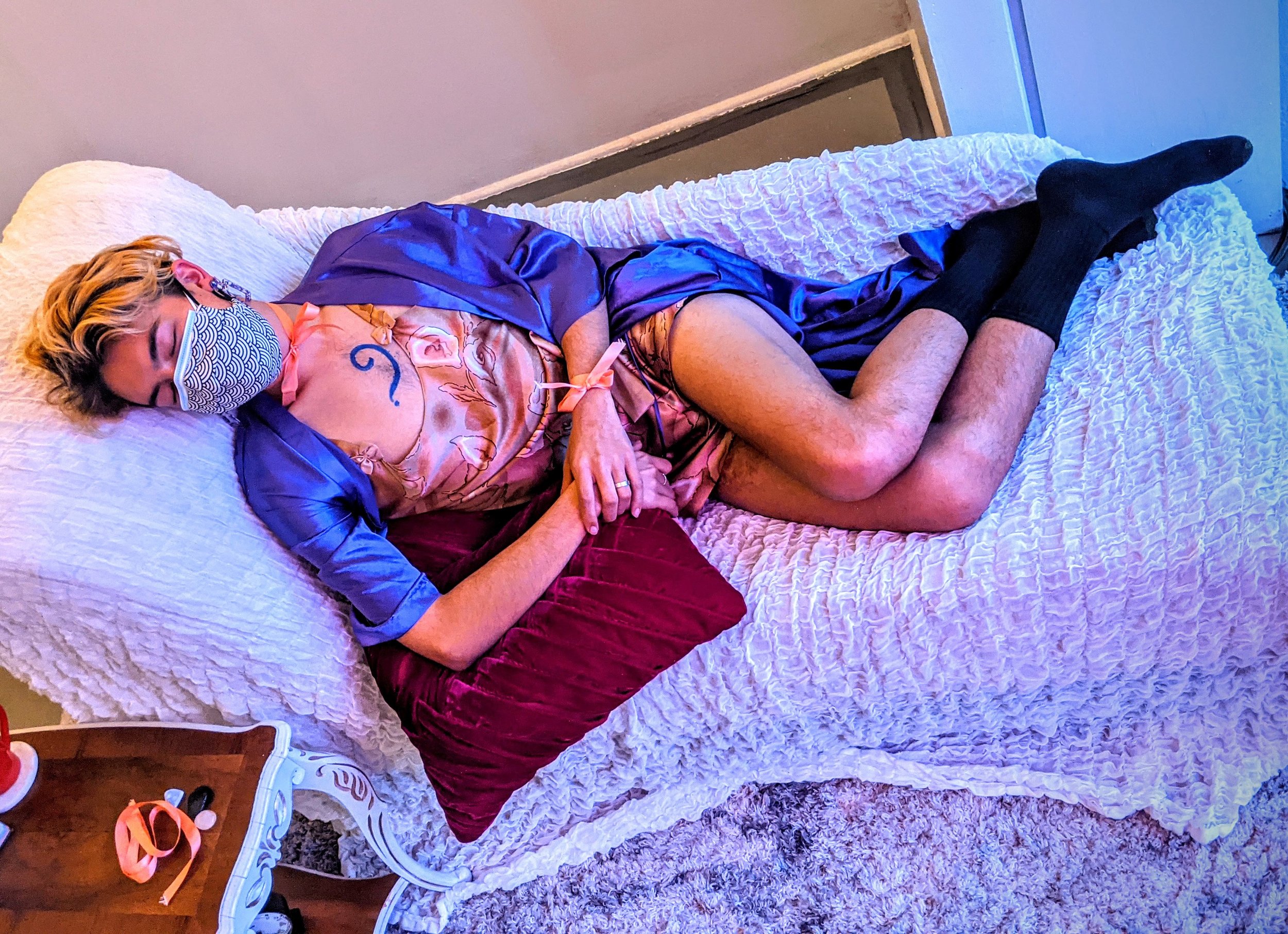
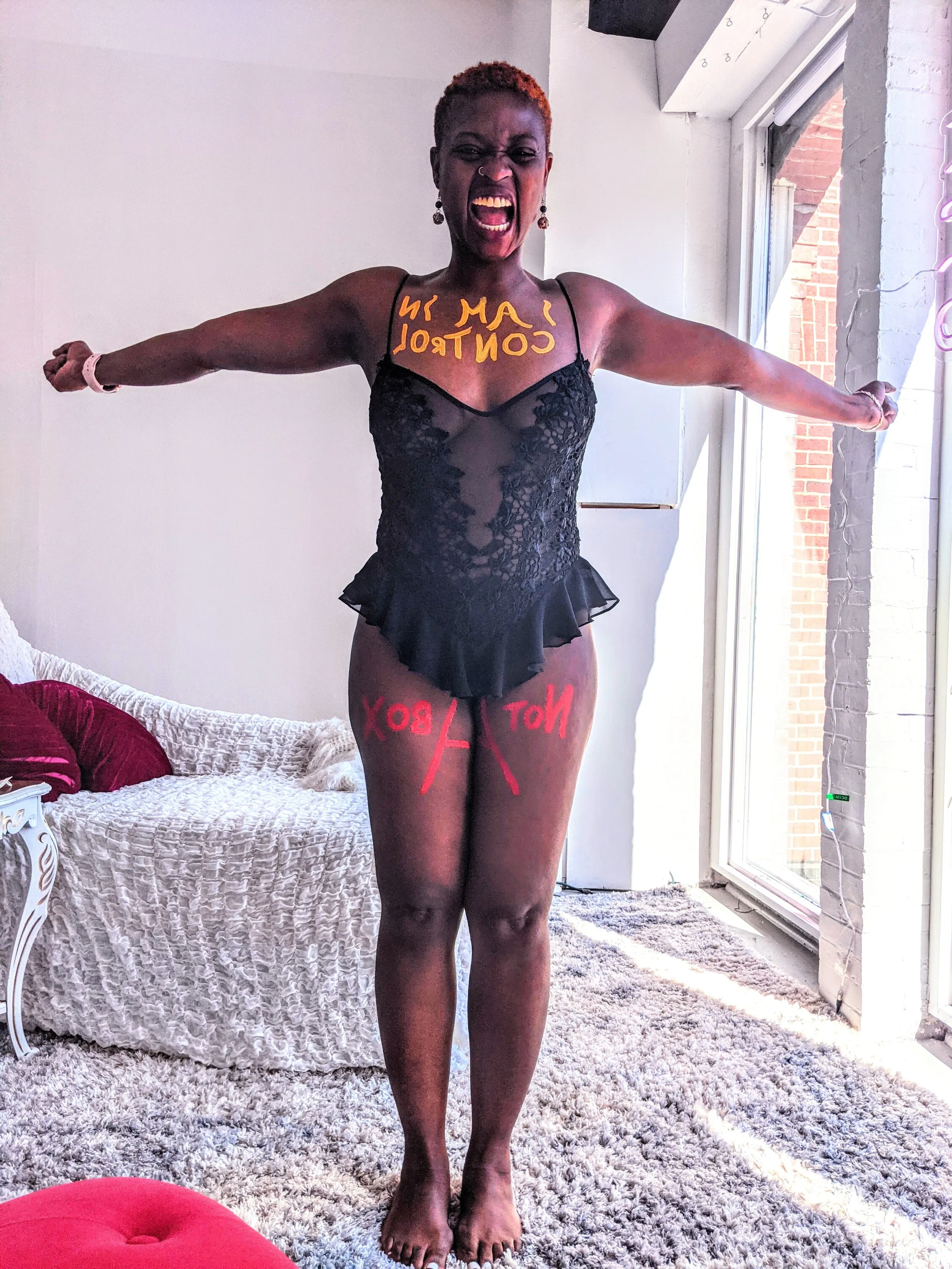
“Live Nude Girls” was an interactive exhibit about the politics of the body and physical closeness in a post-pandemic world. In the wake of the pandemic, how we connect had drastically changed. We had new, exciting possibilities of virtual spaces and heightened pressure and preciousness of physical connection. This interactive exhibit explored how we relate to the body in person, in portraiture, and on screen as we adapt to different cultural norms of connection.

The visual art exhibit in the front gallery windows included portraits of women, trans, and non-binary people whom the artist had worked with in somatic inquiry about their experiences in and relationships to their bodies. Participants then selected words and phrases that came out of the exploration to be written directly on their bodies with body paint. In most of the portraits, the words are backwards with the participants viewing themselves in the mirror. The resulting paired portraiture shows each person as object, speaker, and canvas and is accompanied by a poem or mantra that reflects the interview. In the space between each of the portraits are mirrors hung to reflect the viewer and adding an additional vantage to see portraiture hung behind the viewer.
The gallery space for “Live Nude Girls” had multiple opportunities for participation. On weekday evenings and on the weekend during the day, visitors had the opportunity to interview with the artist about their relationship with their body. The core practice of this installation was the composition of poetry in live time while interviewing participants. Otis also offered body painting if the participant wanted to see an outward expression of their inner experience. For those who wanted to have a message painted backwards, this provided the unique perspective of viewing, in the mirror, their own words from and to their body rather than a status update facing outwards or other normal modes of communicating out into the world. This was a powerful opportunity to be in conversation with the body in a playful way while having an experience that was also deeply impactful. While some visitors wanted to participate directly in this way, others wanted to simply view the portraiture and read about the subjects and their stories about their body journeys through the poetry reflections. Due to pandemic restrictions, this was done from street level looking up into the gallery as others were in a somatic journey, being body painted, and then photographed.
At the end of the residency, Otis hosted a discussion about “Live Nude Girls” and the impact of increased virtual connection on self-image, our perceptions of others’ bodies, body alienation, and practices that foster embodiment and somatic healing from isolation. As a shamanic healer and somatic therapist, Otis uses energy healing journeys (into co-imaginal spaces), somatic practices, and Authentic Movement as integral parts of her creative process and social practice art. She discussed how we use energy healing practices, somatic practices, and creative practices in combination to further social justice and pleasure activism. She also revisited ideas of Audre Lorde’s and adrienne maree brown, inviting participants to reflect on the “personal as political” and the wave-making that happens when we prioritize felt pleasure in our own bodies.
“Live Nude Girls” was developed over the course of two years, following Otis’ natural progression of other social practice art installations that mirror back to the public the best of who they are and the magnificent, universal humanity that connects us all. Otis promotes peacebuilding through public art, shifting the dominant narrative to recognize natural compassion and empathy and the power each individual has through local, community action. At the core of her work is the question, "How do we make peace more captivating than conflict?"